
BART
Accessibility
Designing real-time transit access for riders
who can't afford a broken system.
Designing real-time transit access for riders
who can't afford a broken system.
BART's elevators and escalators go down constantly. There's no real-time status in the trip-planning flow. Riders who depend on accessible infrastructure don't find out it's broken until they're already at the station, under time pressure and without a backup plan.
I set out to fix that across three touchpoints: the BART app, in-station signage, and Google Maps.
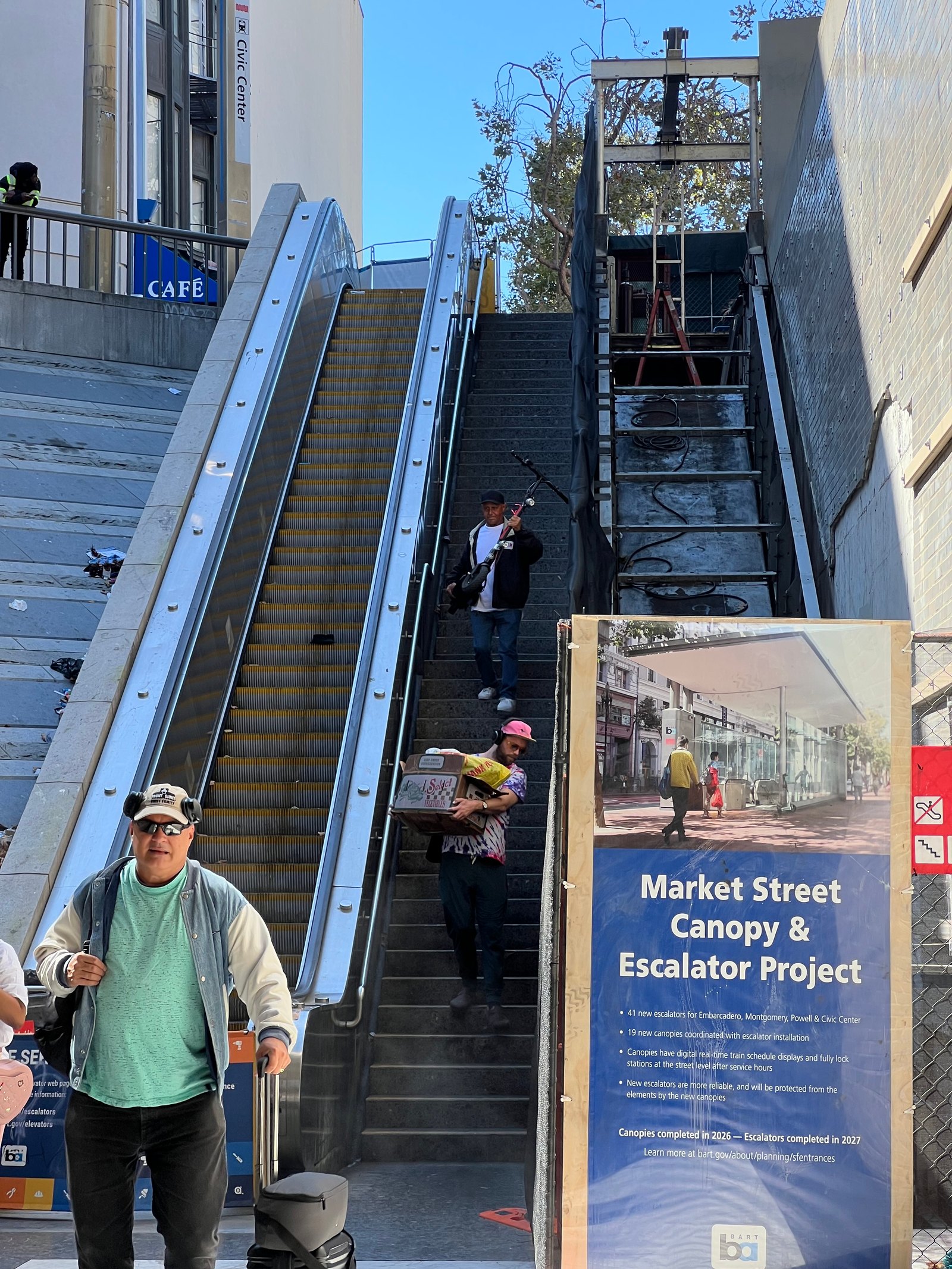

They are often down for repair with no timelines ever provided. The elevator doesn't seem like an option.
Tanya · Frequent commuter, knee problems
The elevator is out of service so much I just use the stairs. And it lets out in a high crime area, so it's safer to just take the extra time.
BART rider · Mobility impaired, uses a cane
These aren't edge cases. Elderly riders, mobility-impaired commuters, tourists, and daily riders are quietly absorbing the cost of a broken system every single day.
Research finding · Spring 2025
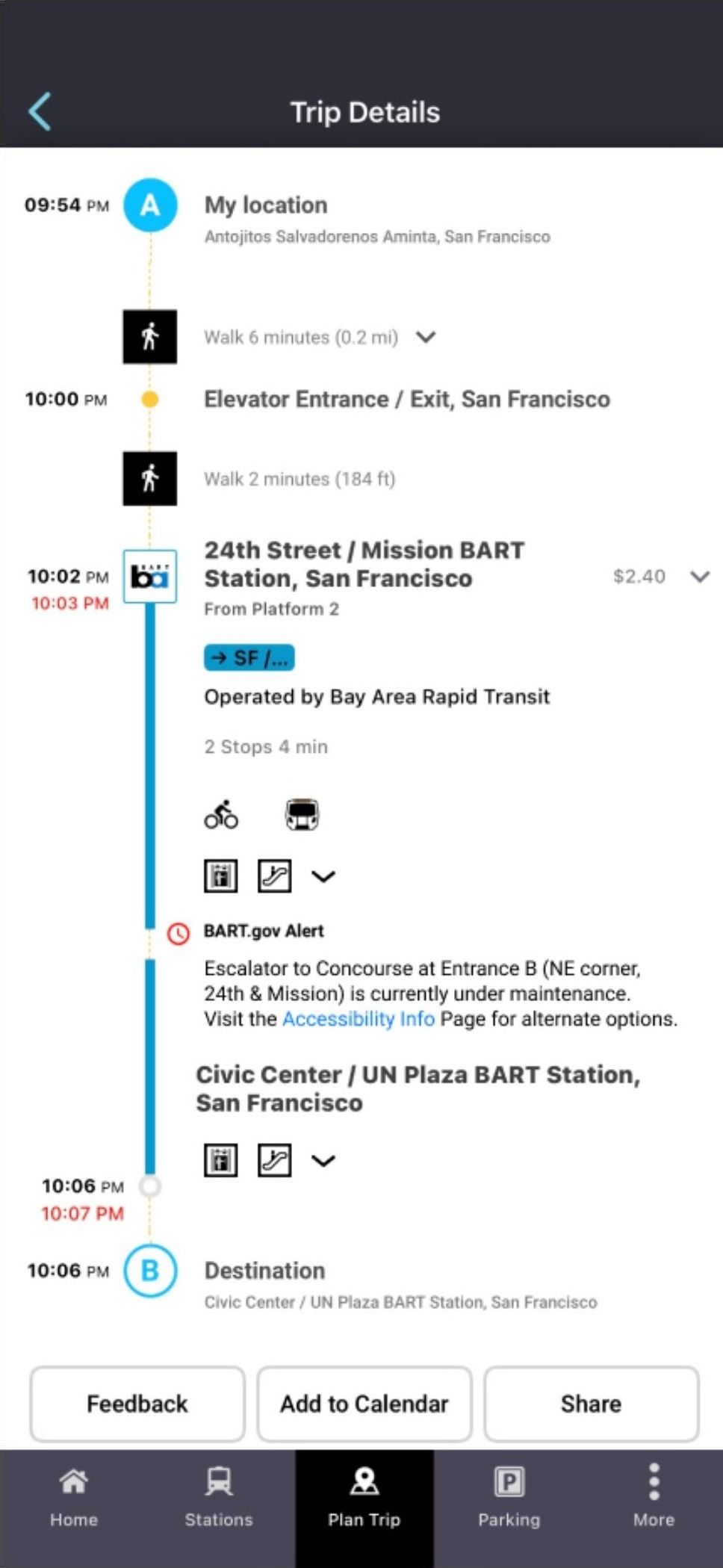
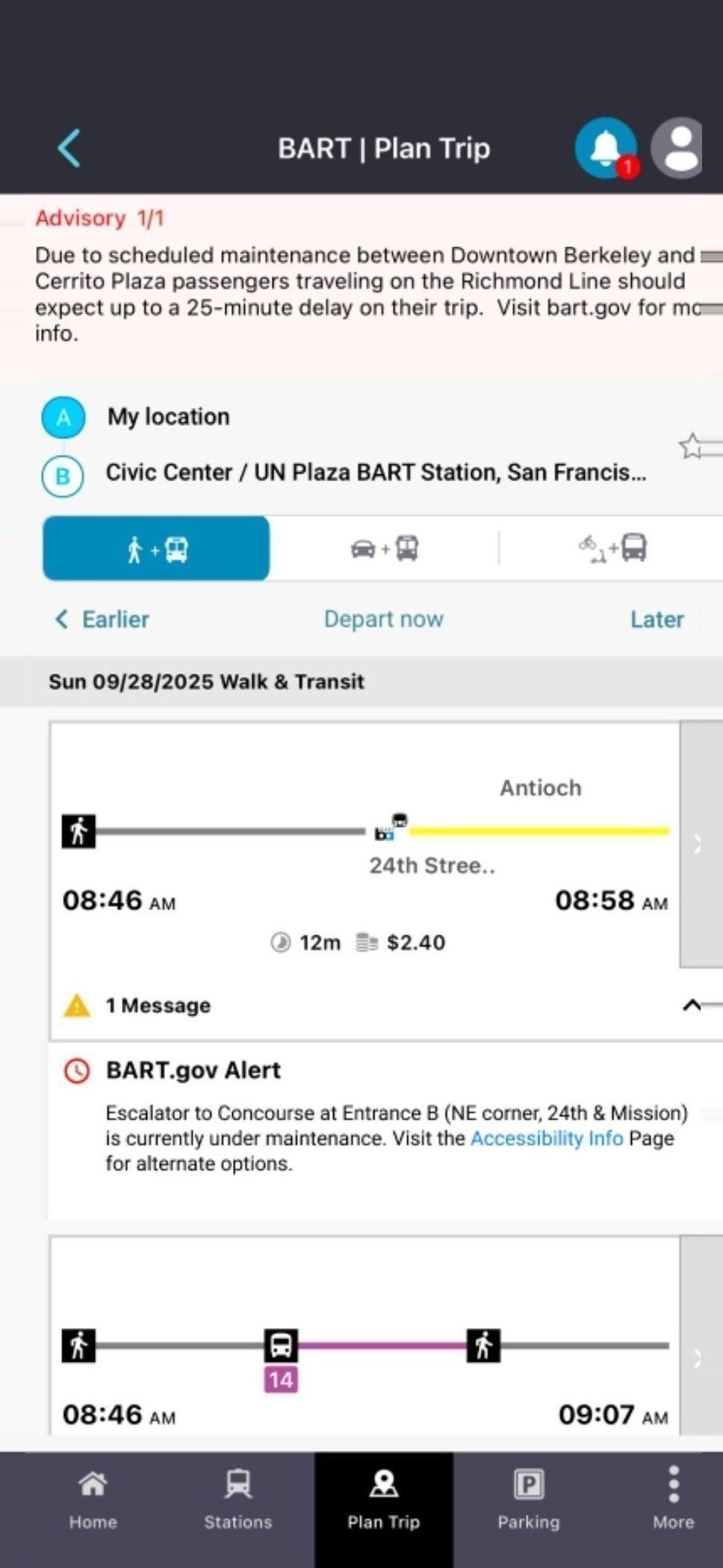
I integrated elevator and escalator status directly into the trip-planning flow. When a device is out, an inline alert appears with the affected entrance and alternate options. No more hunting through a separate Advisories menu.
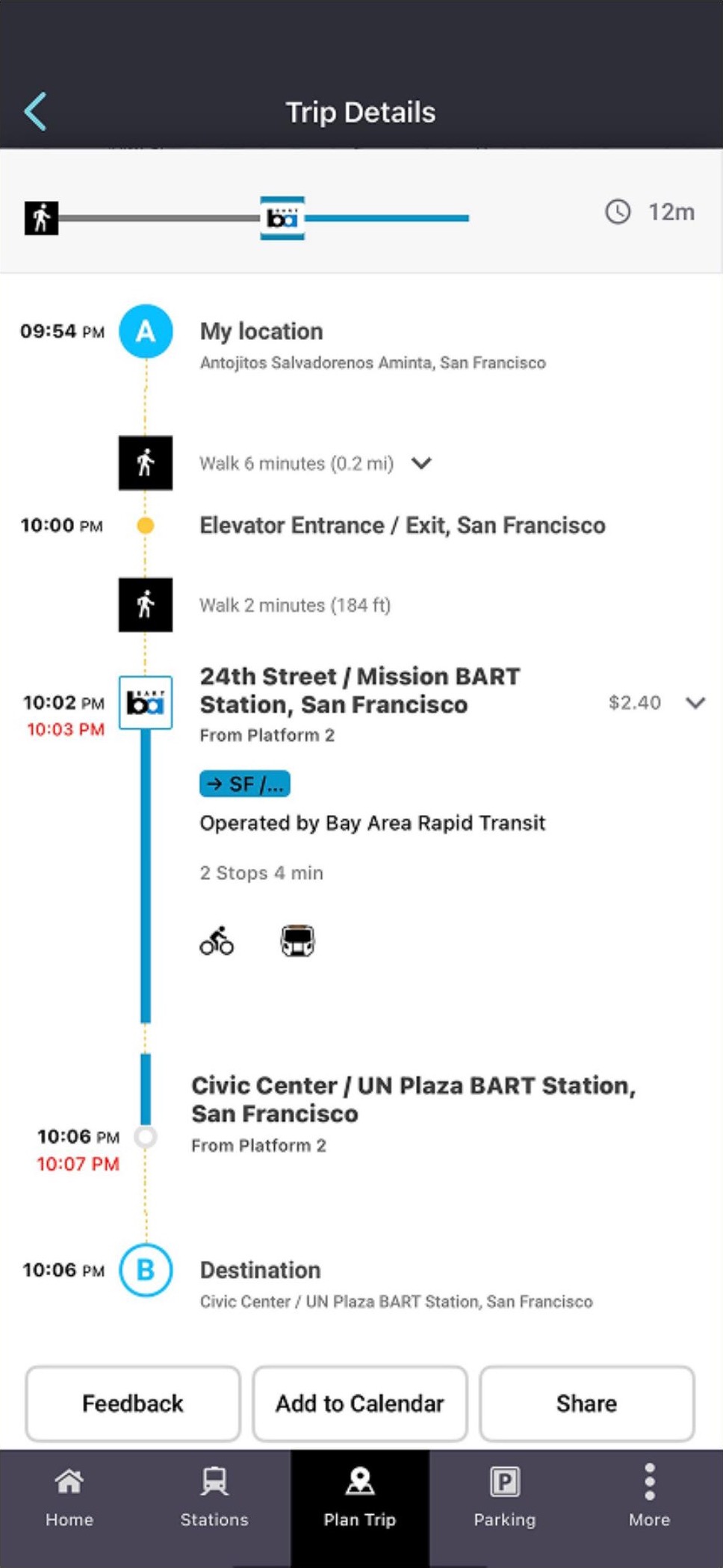
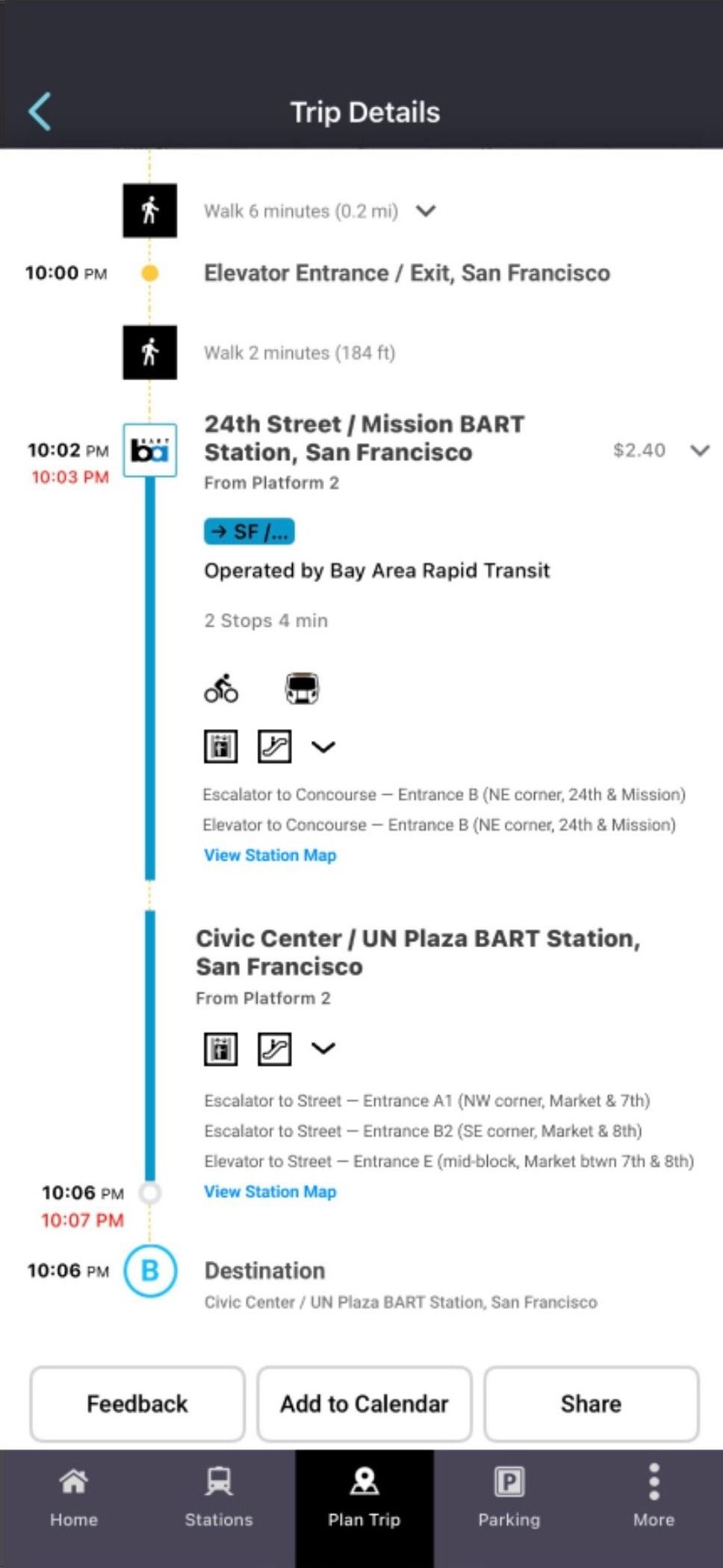
Trip Details shows stops and timing. Zero mention of elevator or escalator status at any station in the route.
I surfaced elevator and escalator icons directly in the station row. One tap expands to entrance-level detail.
The expanded state names exact entrances, like Escalator to Concourse and Elevator to Street Level, so riders know which door to use before they arrive.
When a device is out, a BART.gov Alert fires inline with the specific entrance, the reason, and a direct link to alternate options.
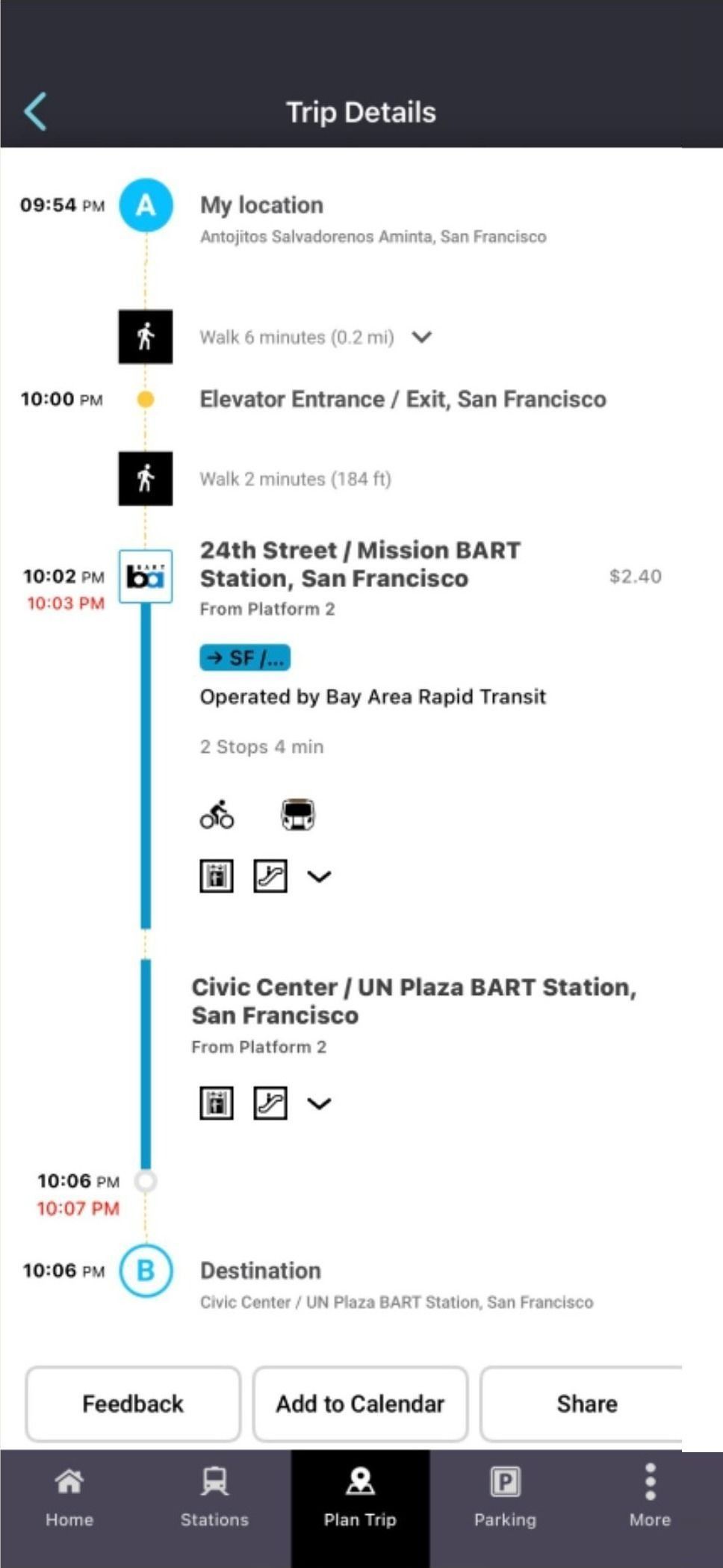
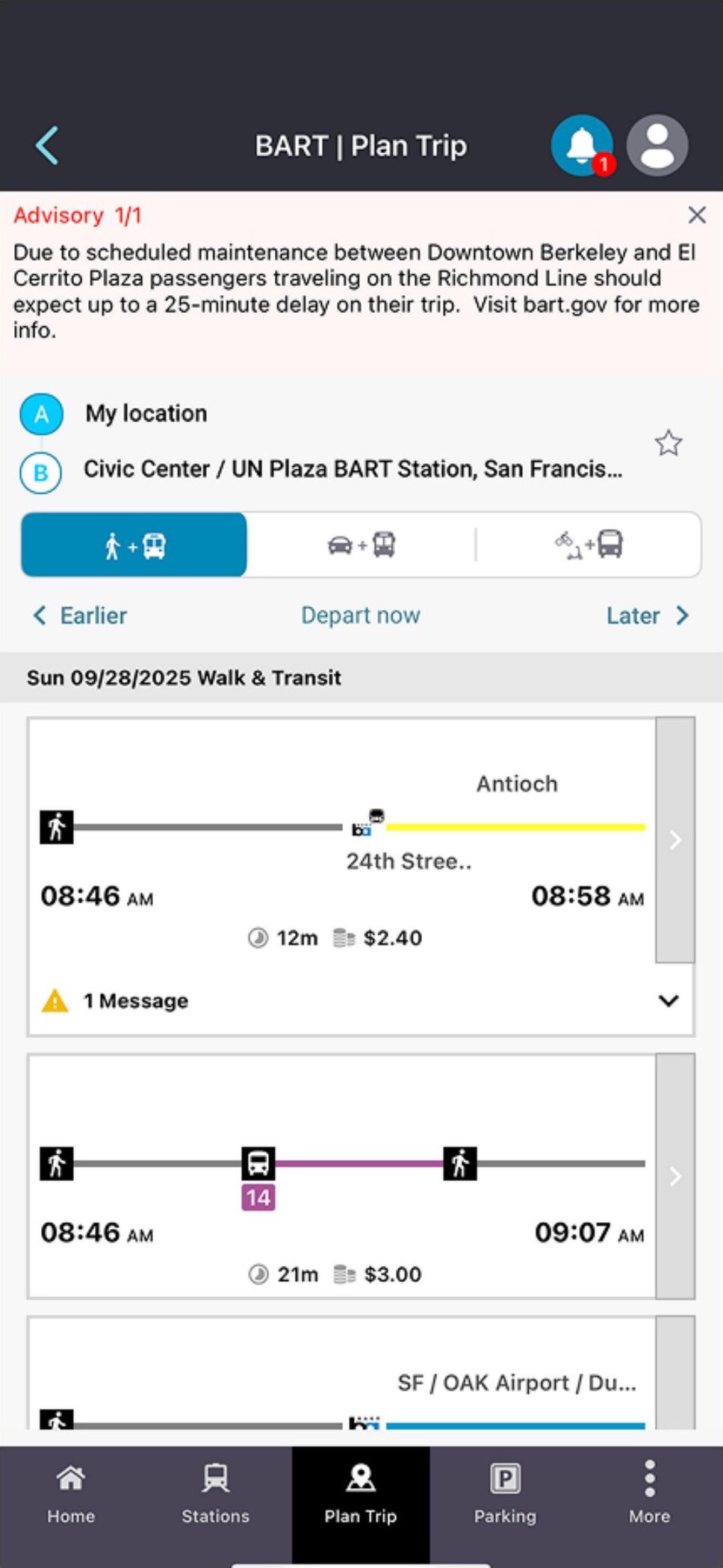
The fix extends into the Plan Trip screen. An Advisory banner flags any active outage on your route. Tap to expand and a BART.gov Alert appears inline with the specific entrance, its current status, and a link to accessibility alternatives. No separate menu. No dead end.
The existing screen shows a generic all clear. It sits buried inside the station booth, invisible to anyone walking past.
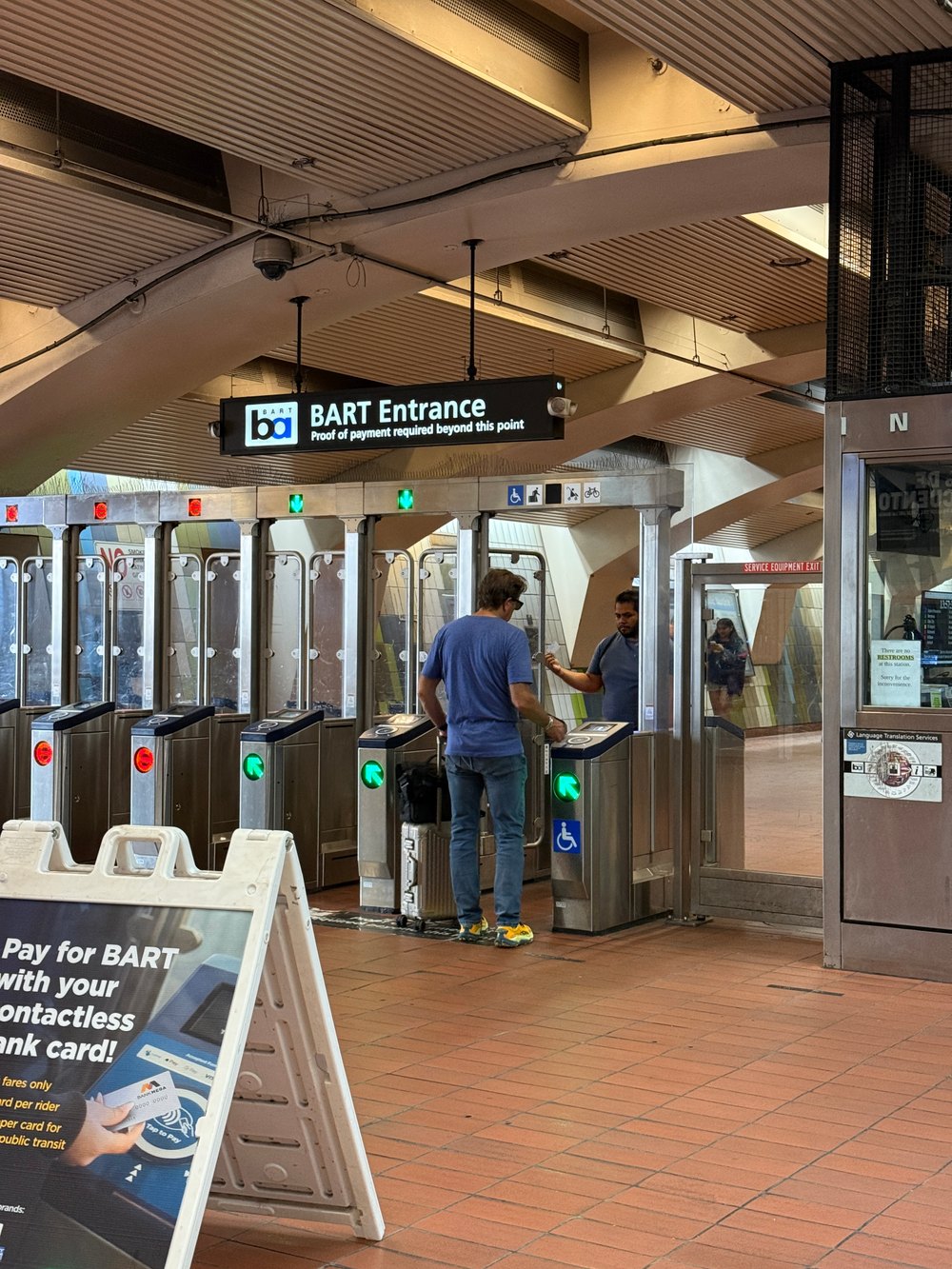
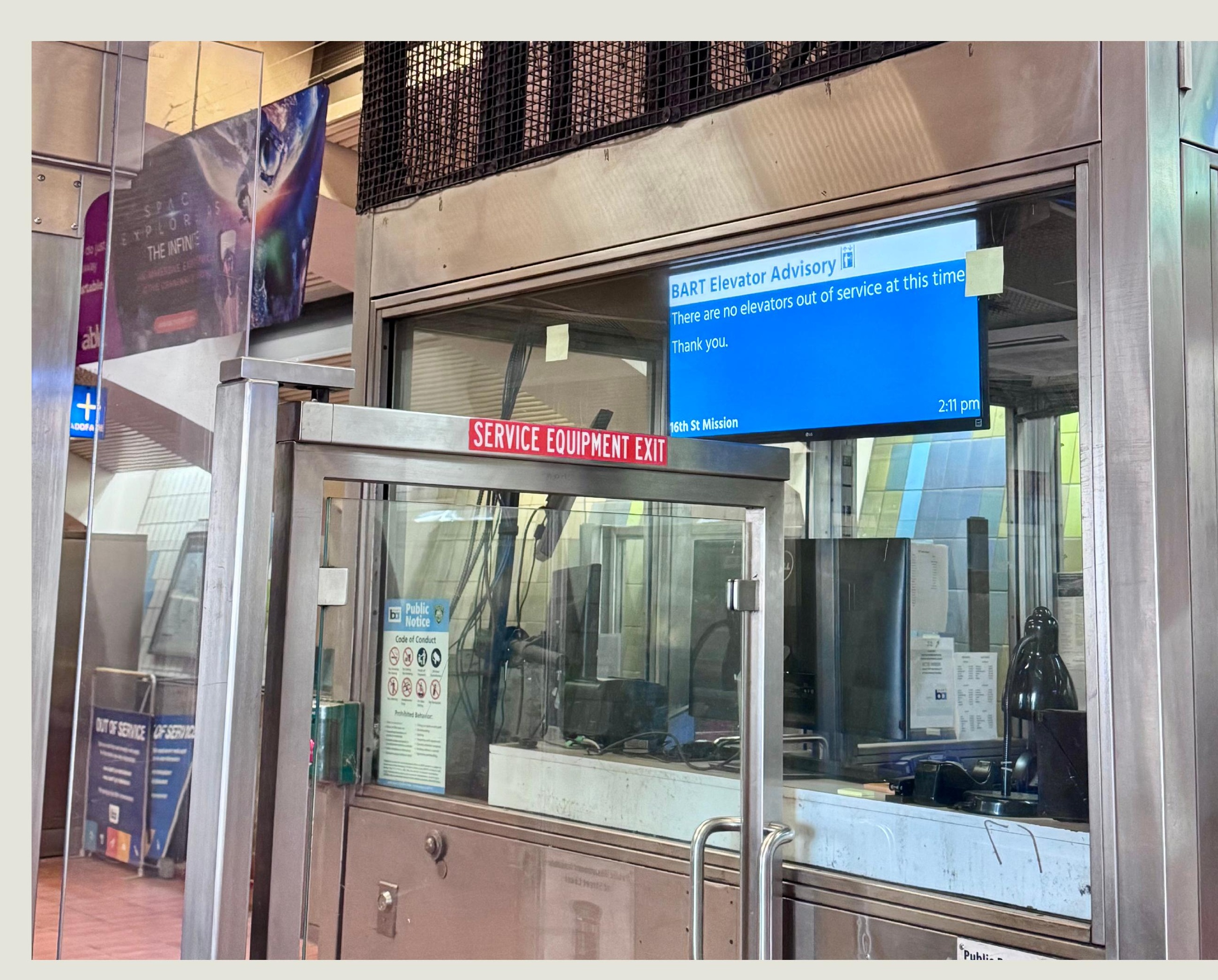
I designed overhead digital signage posted at each entry point with plain-language status. The key decision was placement over polish. Status needs to appear in stride, before riders descend.
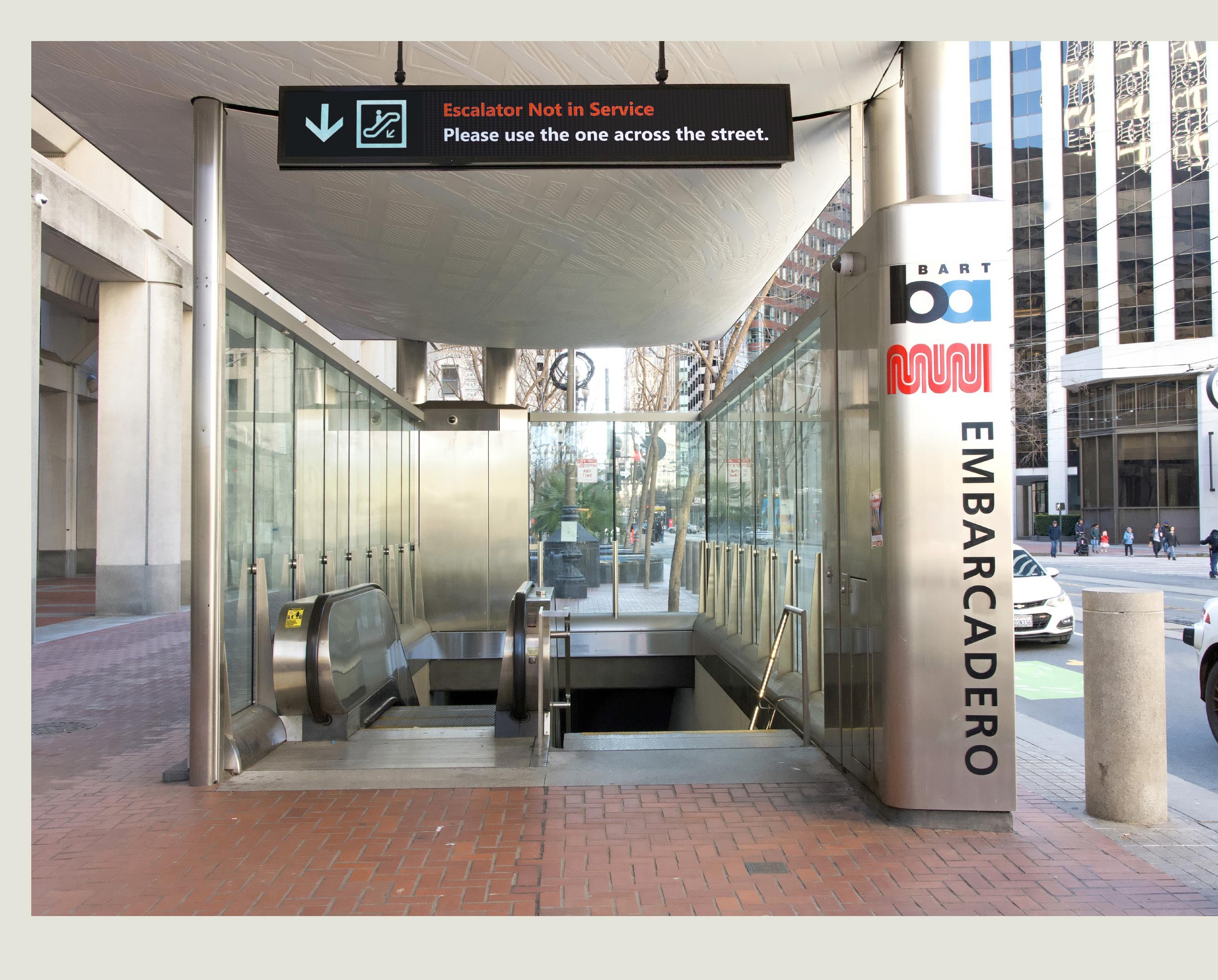
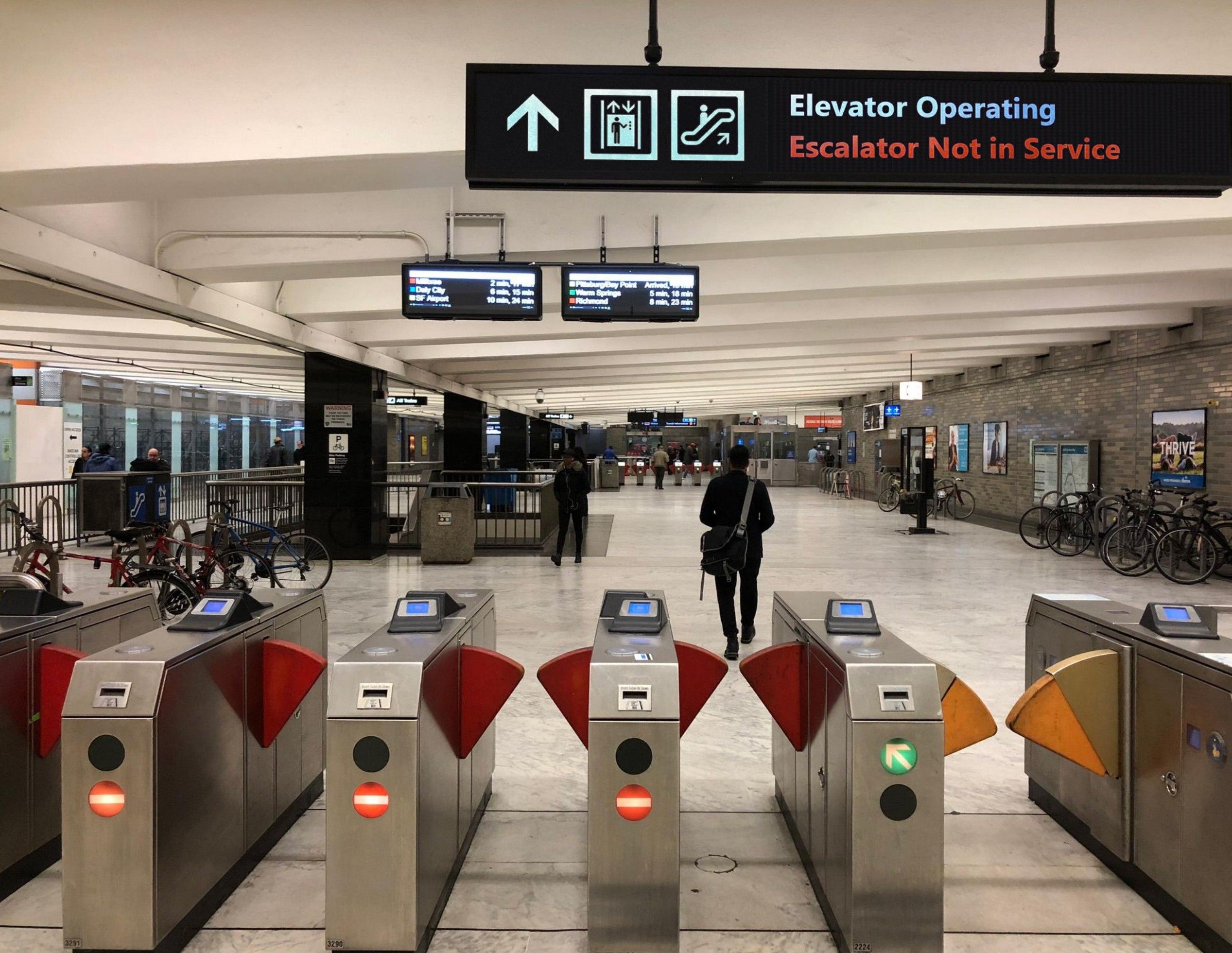
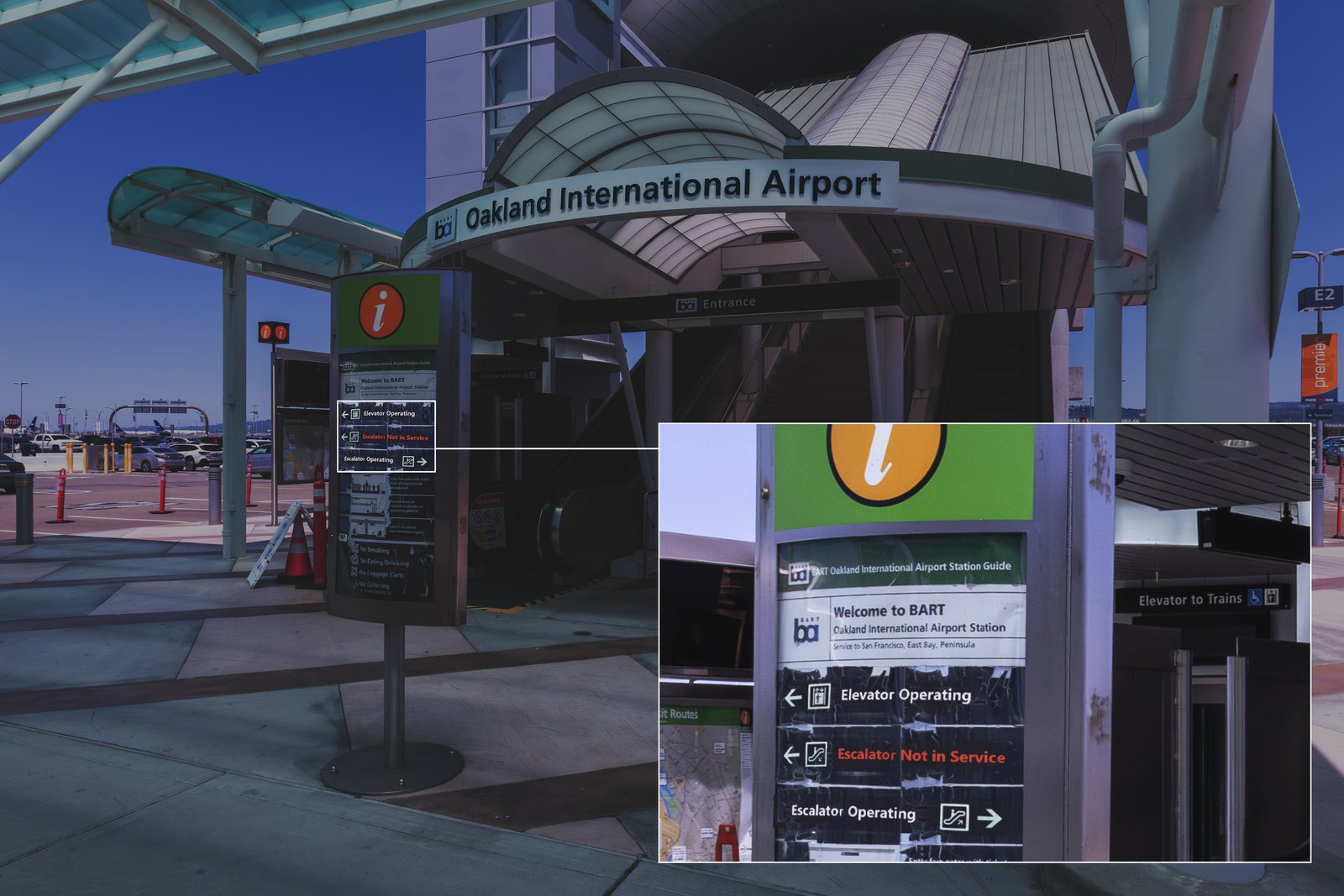
By publishing elevator and escalator status as a GTFS-RT open data feed, BART surfaces accessibility info in every third party app at once: Google Maps, Apple Maps, Transit, and more.
1 data feed.
Every app.
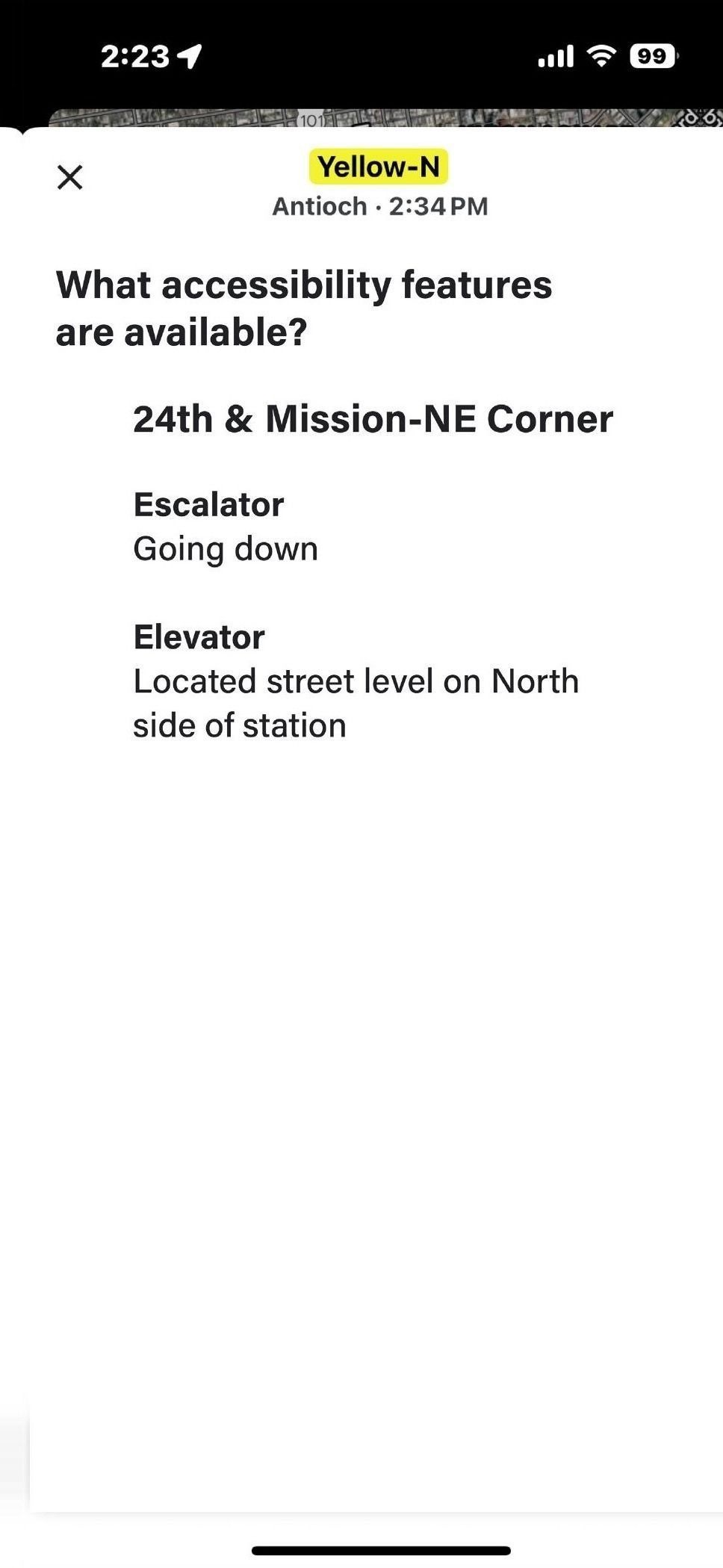
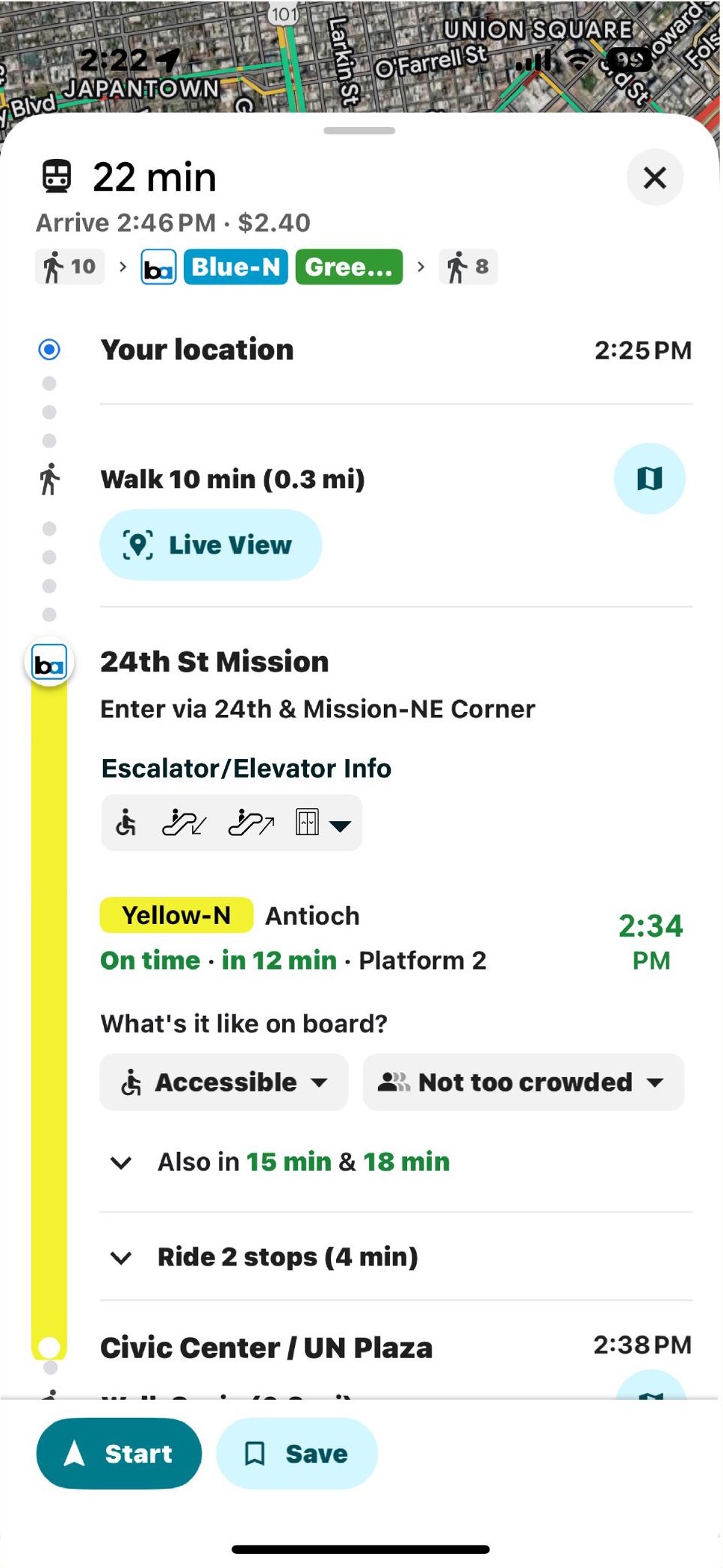
An "Escalator/Elevator Info" row appears in the station stop card, right inside navigation. No switching apps.
Tapping expands a panel: entrance name, escalator direction, elevator position. All sourced from the GTFS-RT feed in real time.
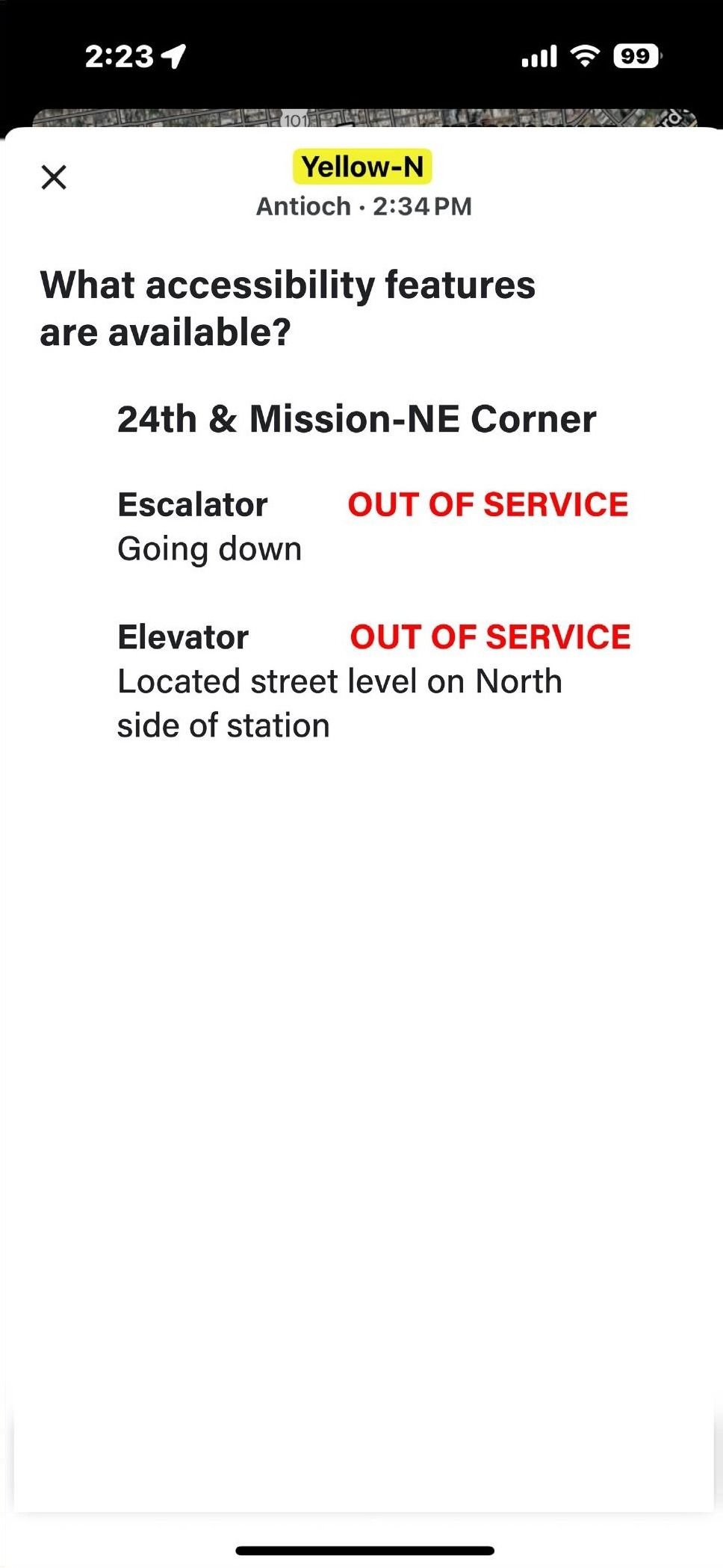
When a device is down, "OUT OF SERVICE" appears in red at the entrance level. Specific, clear, and visible before you leave home.
A dedicated elevator pin and an entrance callout land directly on the navigation map. Riders with mobility needs, strollers, or heavy bags see exactly where the elevator is and which corner to enter from, before they ever leave the platform.
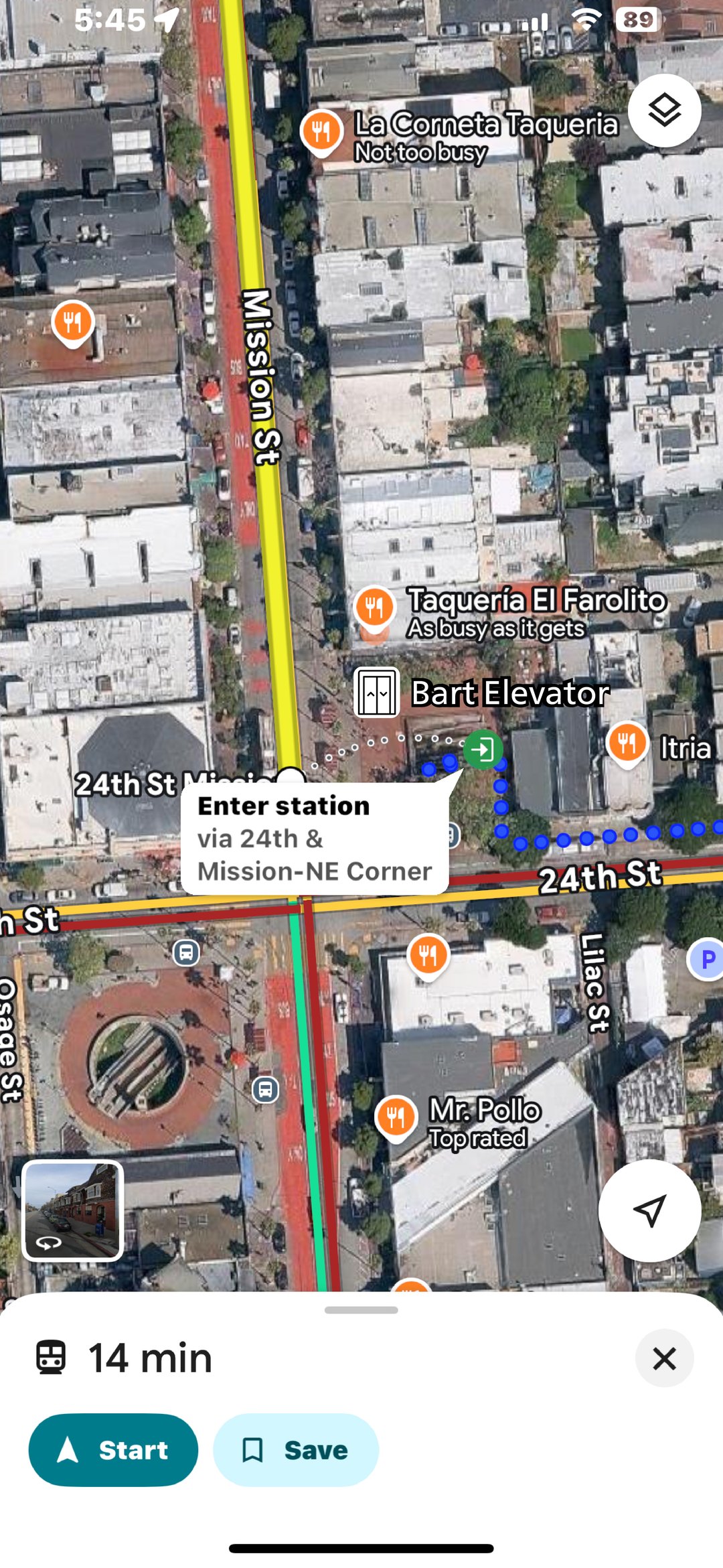 New · Entrance callout
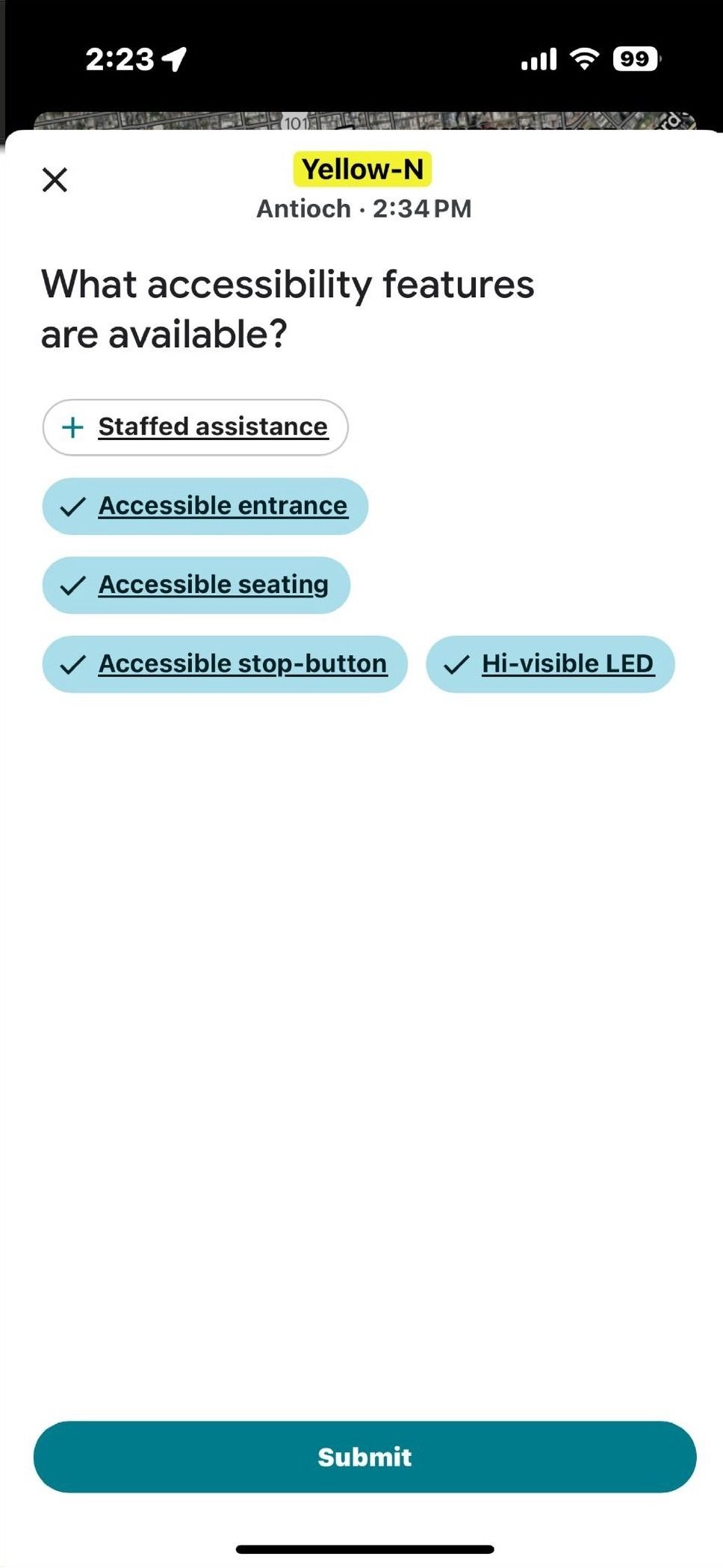
Beyond the live feed, I designed a crowdsourcing layer that lets riders report accessible entrances, seating, stop buttons, and LED signage directly in Google Maps. The platform already prompts this kind of feedback for transit. Extending it to accessibility status means BART's data improves over time, even when the official feed lags. The community becomes part of the infrastructure.
For Riders
Accessibility status surfaced before arrival. Fewer surprises, better decisions.
Live status shows up in the apps riders already use, which takes the guesswork out of every trip and builds trust in the system as a whole.
For Mobility-Impaired Riders
The ability to plan around outages from home, with confidence.
Riders with mobility or sight considerations know before leaving whether a device is out of service, and which direction an escalator is running, so the route they choose is one their body can actually take.
For BART
One open data standard that scales accessibility information across the entire transit ecosystem.
The same feed doubles as operational insight. It informs maintenance priorities, supports emergency dispatch, and grows ridership by making the system easier to trust.
The pocket, the station, the platform. One failure addressed at three scales.